

||: Girls :||: Chance :||: Music :||
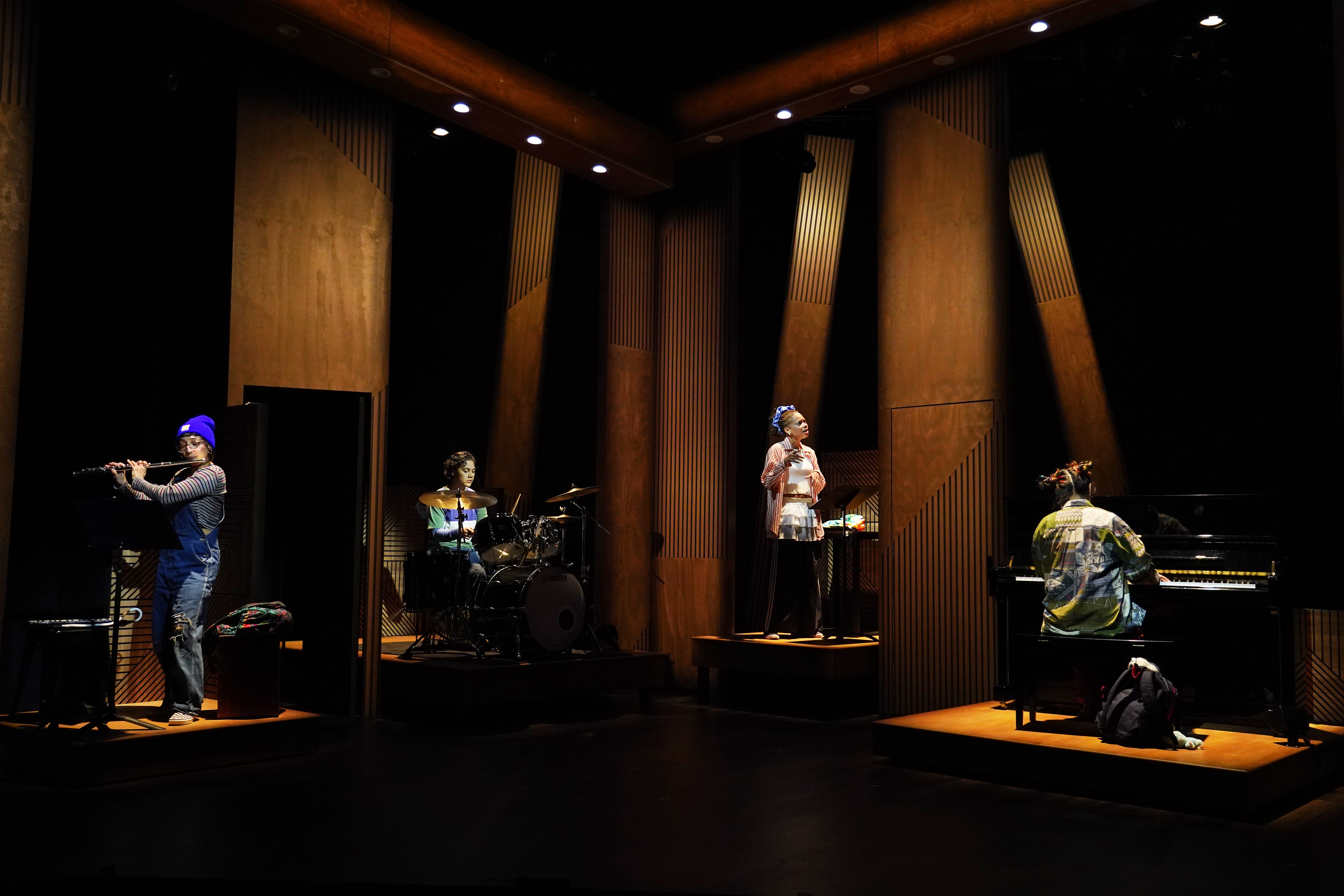
There’s like a dozen plays at present about women between the age of 8 and 18. Here’s another, very much worth your time, written and composed by the magical Eisa Davis and directed with great lightness and sensitivity by Pam MacKinnon. Four remarkable actor-musicians craft delicately shaded portraits of high schoolers attending an all-girls East Bay music conservatory one summer, bonding over music, making out, fighting, drifting apart. Not only is the scene work fresh and understated, the charming, talented four—Gianna DiGregorio Rivera, Hillary Fisher, Naomi Latta, and Yeena Sung—jam in improvised sessions that are different at each performance. Aleatory, or chance music, as it’s called. There’s lots of musical interludes that bubble up and merge into and out of scenes: a Rossini aria, an improvised bit of vocalese that morphs into drums, piano, and flute. Each of the girls is trying to find and hold on to the music in their lives. Not all of them successfully. (Keep your eyes on these magnetic performers.) Davis touches on absent fathers, alcoholic moms, suicidal ideation, bulimia, and sexual panic, but gently and empathetically. Despite a couple of late plot twists that seem overly convenient, ||: Girls :||: Chance :||: Music :|| is an engrossing coming-of-age tale whose unfeigned openness honors its characters’ wisdom and fragility. Nearly two hours flow by. There’s something very special about this show with the finicky title. See it and you’ll feel gifted, too. More here.
Derangements
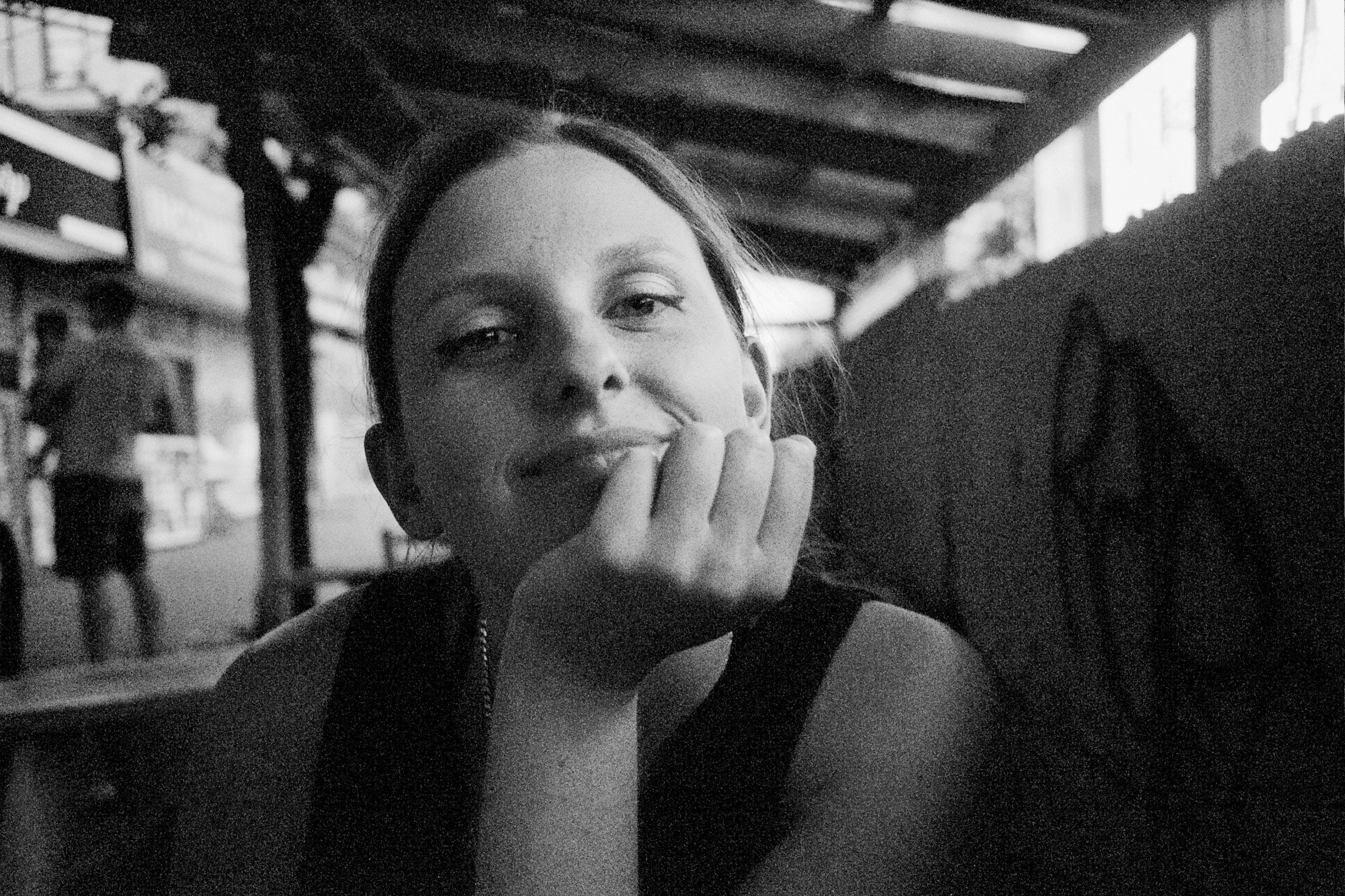
Second offering in Clubbed Thumb’s Summerworks, and the runs are short. The cast is fire: Hannah Cabell, Camila Canó-Flaviá, Crystal Finn, Marceline Hugot, Allan K. Washington and Danny Wolohan. The ace director Annie Tippe has brought work by Dave Malloy and Julia May Jonas to blazing life. And the script by Nadja Leonhard-Hooper (at least on paper) is crazy funny gold. A surreal comic nightmare about sexuality, paranoia, loneliness, and social disintegration. Two old friends meet for dinner (that feels scripted by a younger Wallace Shawn). Anne Marie, uptight and anxious, reunites with Roxanne, who reads every social encounter as a sexual advance. What begins as awkward catching up escalates into High Weird when Roxanne shares the suspicion that her gynecologist’s routine exam was flirtation. Then a flasher with literally blinding genitals shows up. Is it any wonder that the male gaze, predatory sexuality, and the epic horror of heteropatriarchy can drive a lady mad? More here.
21st Century Princess
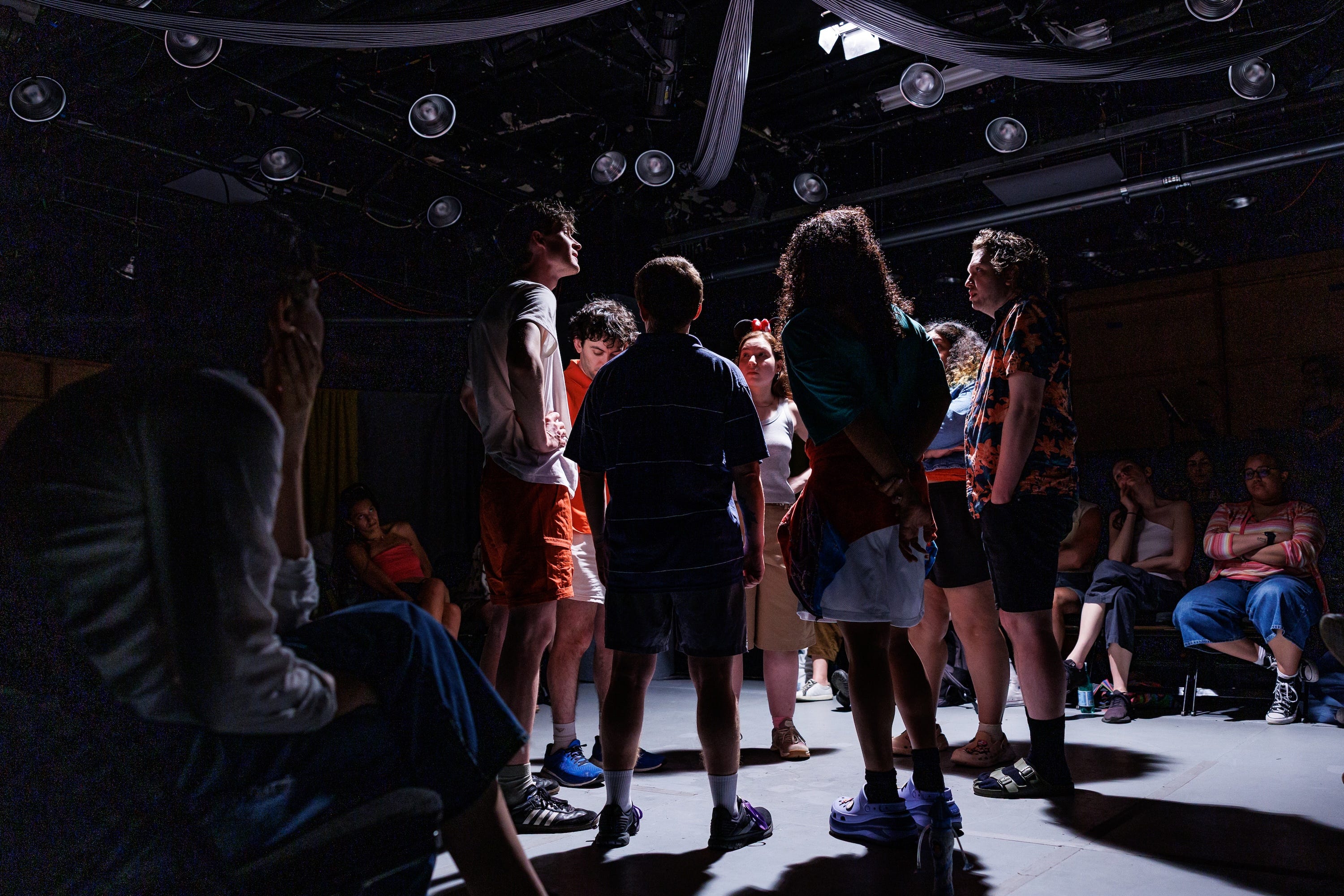
In a 2009 interview with Der Spiegel about his lavishly illustrated book of art history and philosophy, The Infinity of Lists, Umberto Eco hypothesized why we scribble stuff on scratch paper. “We have a limit, a very discouraging, humiliating limit: death,” Eco observed. “That’s why we like all the things that we assume have no limits…It’s a way of escaping thoughts about death. We like lists because we don’t want to die.” I had Eco’s tome on a shelf, but I had to discover that quote after seeing writer-director Jordan Baum’s hyperfecund and cryptic mediation on the Disneyland Resort. Yes, Uncle Walt’s funtopia in Anaheim, California that employs approximately 36,000 “cast members.” All those people who sustain a world that promises an infinitude of magic, wonder, enchantment, and talking, singing animals. Minimalist in production design but maximalist in language and actor virtuosity, 21st Century Princess is a hallucinogenic workplace immersion. Limited run through Sunday. (Immediate Medium site says sold out, but show up and get on waiting list.) This prodigious, hilarious vibe of a play crazy-quilts scenes of backstage life involving resort employees, visitors, and… a cat… I believe. It’s like somebody made a Robert Altman community mosaic about the Magic Kingdom, but in the style of Richard Linklater’s Slacker—then blew pot smoke in its face for two hours (there’s an extended scene of workers “hotboxing” in a car). Alternate bottom line: It’s Our Town if the locals had jobs like “Teacup Machinist,” “Avian Management,” “Mountain Cleaner,” or “Wishing Well Attendant.” In one bravura sequence, “cast members” stand in a circle and introduce themselves by (exotically silly) name and utterly batshit job which goes on for seven pages. Lists! Lists! Plenitude! Infinite Cast Members! Surrender to Baum’s cartoonish, hyperspecific dreamscaping and pullulating personalities. Superb 13-strong ensemble includes Jess Barbagallo and Maggie Hoffman (who played Molly Bloom in Elevator Repair Service’s Ulysses earlier this year). You’ll have a Goofy grin on your face the whole time. (P.S.: This show has got to return. I’m looking at you, St. Ann’s Warehouse, Under the Radar, Park Avenue Armory, C’MAWN!!!!) More here.
Robert Wilson On Screen
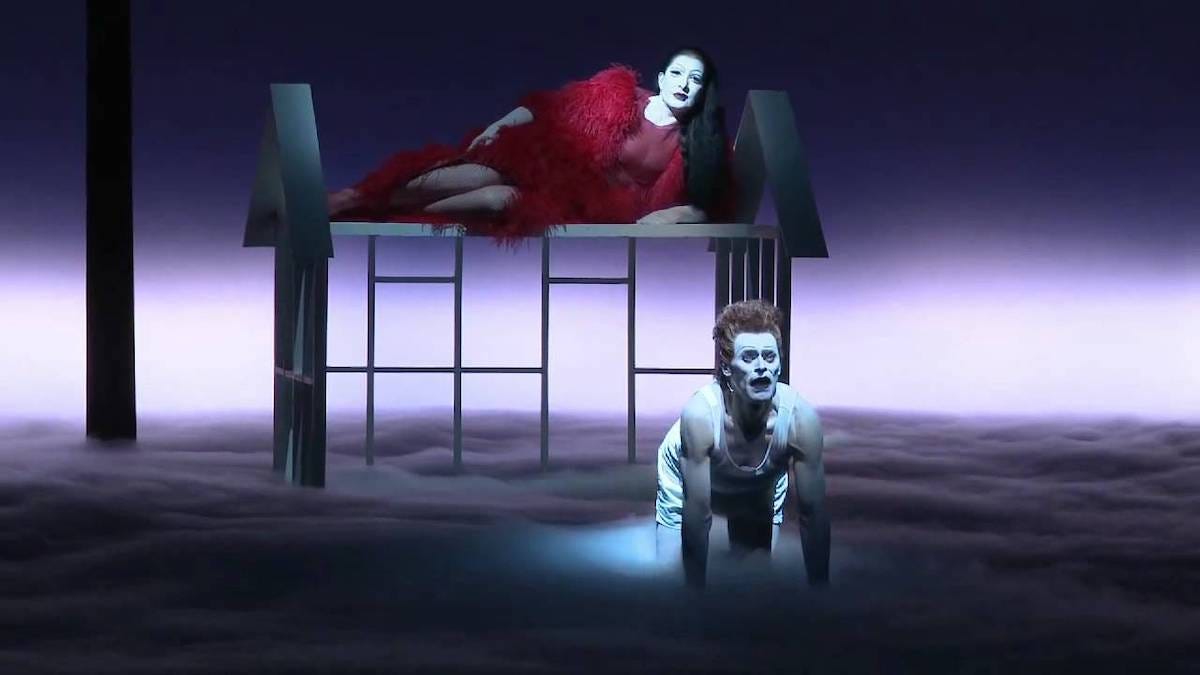
If you couldn’t make the brief run of Moby Dick at BAM last month, this might soothe the pain of missing one of Robert Wilson’s last beguiling, dreamlike creations. The tenth Segal Center Film Festival on Theatre and Performance spotlights “Robert Wilson On Screen,” a major retrospective running May 29–June 5 at Anthology Film Archives. The series features films by and about the avant-garde legend, including VIDEO 50, Deafman Glance, Stations, and documentaries on landmark productions such as Einstein on the Beach, The CIVIL warS, and The Black Rider. Presented in collaboration with Anthology Film Archives, the Robert Wilson Estate & Trust, and the Watermill Center, the retrospective traces Wilson’s groundbreaking fusion of theater, visual art, opera, and film across five decades of experimental performance. Tickets ($14-$8) can be purchased here.
Giant
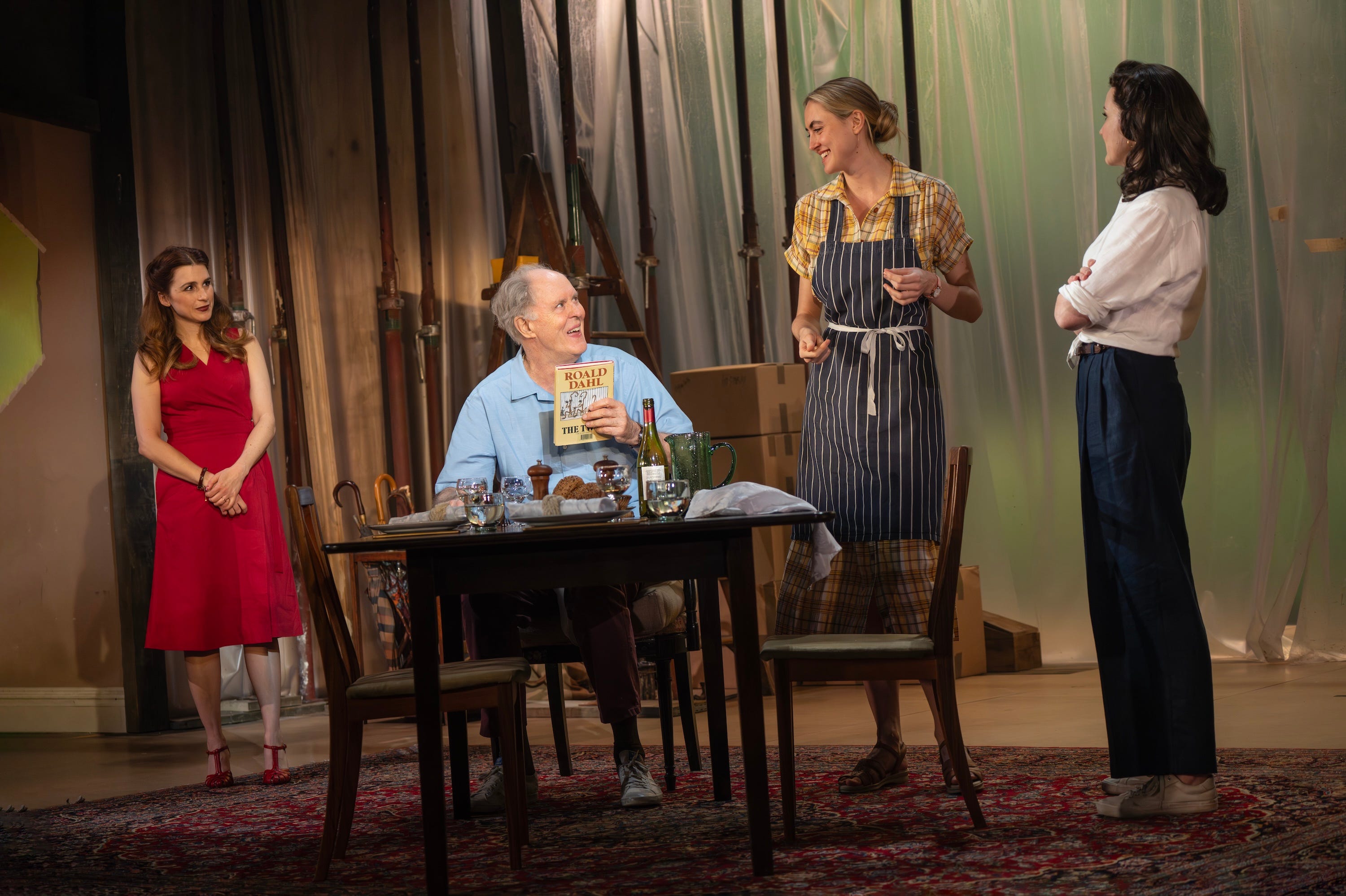
Bigoted Friendless Goy. John Lithgow is yeah, towering, in Mark Rosenblatt’s smartly structured and verbally dazzling portrait of the artist as emotionally stunted sadist. Was Roald Dahl a brilliant children’s author who believed in the power of smaller, weaker things to stand up to bigger, crueler beings? Of course. Did his rather childish moral worldview lead him to channel all his loss and misery into an anti-Israel stance that he contemptuously let slide into antisemitism? Yes. Racism is a fairy tale, and Dahl swallowed hook, line, and sinker the one that assuaged his lifelong sense of injustice. All the performances are tip-top in Nicholas Hytner’s masterful staging: impeccable naturalism in service to a political debate that lives in the bodies and minds of the characters equally. Of course I’ve idolized Lithgow since I was a teen geeking out at Buckaroo Banzai, Twilight Zone: The Movie, and the underrated 2010: The Year We Make Contact. But this is next-level material for the technique-rich beast of a character actor—he turns on a dime from long-grieving father to venomous Jew-hater. Rosenblatt’s drama is a model of snappy pacing and control of information. Giant has a perverse, chilling ending, yet I left the theater abuzz and energized. Strong contender for best play at the Tony Awards. Tickets here.