
Thursday Critic's Picks
I NOTICED... you're looking for something to see?

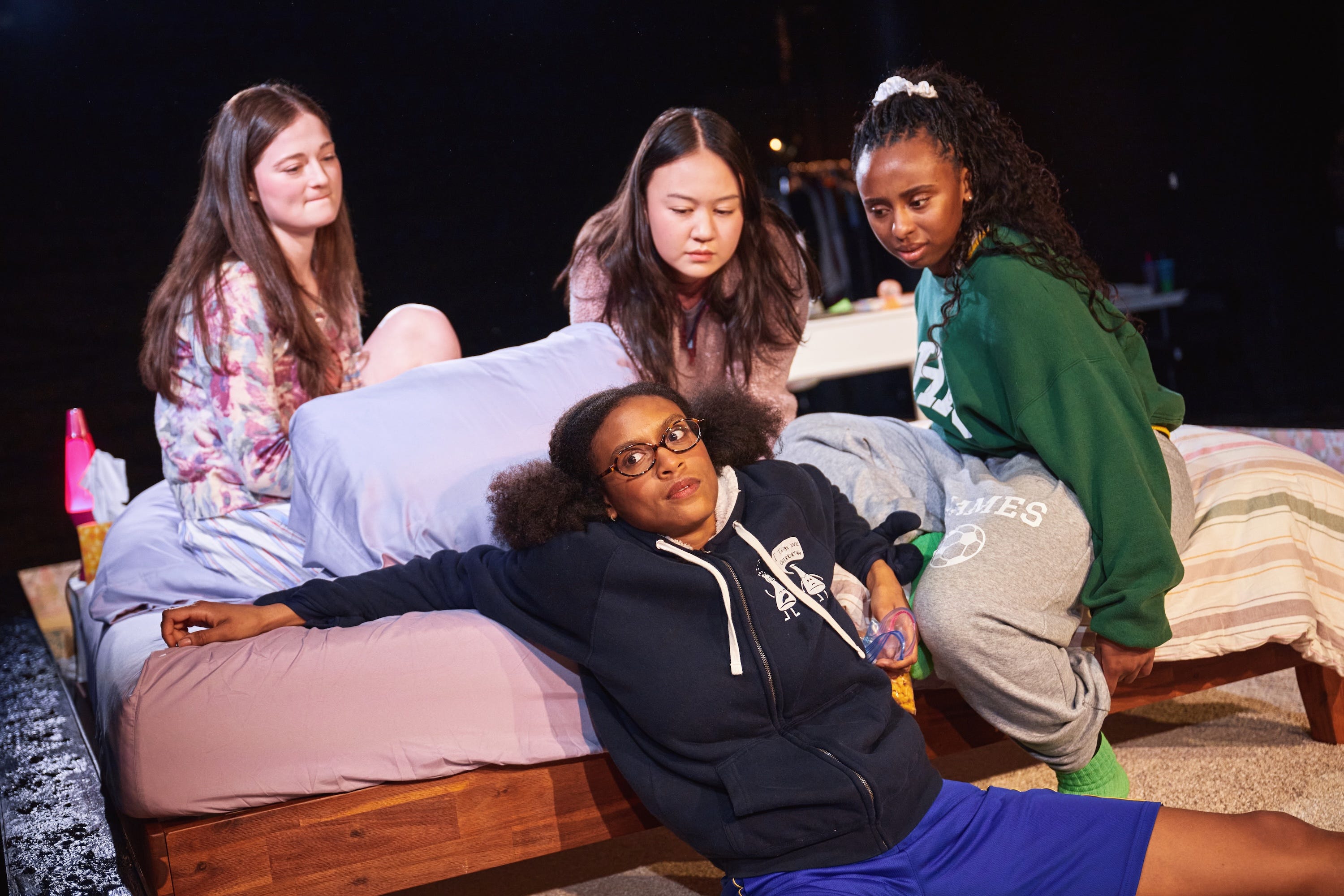
Dad Don’t Read This
Never having been a Sims player or a teenage girl, I might not be the target audience for Eliya Smith’s spellbinding ode to YA rage, resilience and escape Dad Don’t Read This. And yet: Who hasn’t wondered if this is real life or a game, and whether anyone can “win” it? Four high-schoolers navigate the constricting, weird, fake scripts of suburban ennui by hanging out and swapping juicy “goss,” chugging a beverage concocted from shots of everything in the liquor cabinet, and making their Sims do “WooHoo” (Simlish for sex). Like Smith’s equally elliptical and casually profound Grief Camp, the new piece showcases her effortless skill at kids’ slippery crosstalk and her granular familiarity with their inner (and online) lives. Mal (Amalia Yoo) is an Ohio teen with parents forever bickering, muffled, behind walls. Moody and furtive, Mal keeps secret selves both inside and outside SimNation—like where does she slip off to during school lunch? Crowding her bedroom are cool but kindly Noelle (Reneé-Nicole Powell), queerly nerdish Lida (Kayta Thomas), and Sophie (Sophie Rossman), the high-strung Christian girl navigating the predatory male gaze. Each is a not-unfamiliar type, but artfully shaded and armed with dialogue that alternates pithy wisdom with kiddish frivolity. Chloe Claudel (herself a striking performer) steers this appealing, pitch-perfect quartet through its snaking dialogue and builds rich, resonant imagery—such as Rossman executing a furious clog dance on a platform before a glittering star field as Bobby Womack’s cover of “California Dreaming” grooves. I kinda view The Sims as a waste of time, but Smith’s play will richly reward yours. Through May 30.
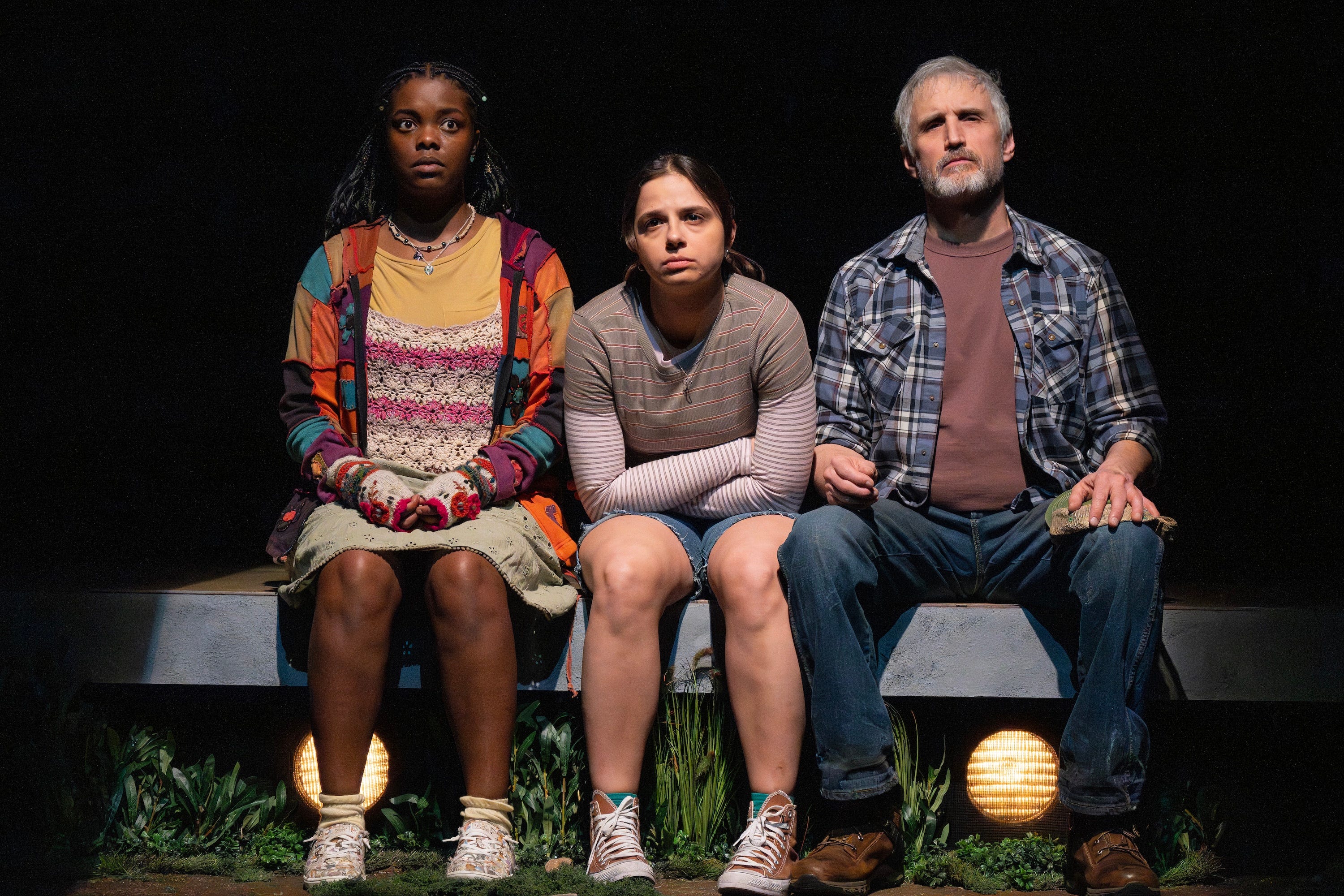
Indian Princesses
Apparently, May is all about girls and their avatars coming of age. Eliana Theologides Rodriguez’s New York debut takes place in 2008 during the housing crash. A motley handful of white fathers and their biracial or adopted daughters have gathered at “Camp Catori” somewhere in the Midwest. It’s a bonding experience, for the young ladies to learn and embody the values of “Indian Princesses” with the sturdy support of their dads. The indigenous kitsch is suitably cringe; a white lawyer stepdad (Greg Keller) exhorts the group to use “Native,” not “Indian.” Rodriguez’s play, which premiered last summer at La Jolla Playhouse, comes to the Atlantic Theater in a beautifully balanced staging by Miranda Cornell (also making her Off Broadway debut). The ensemble includes a murderer’s row of superb character actors—Keller, Pete Simpson, Ben Beckley and Frank Wood—matched by a quintet of excellent young newcomers. Anissa Marie Griego, Rebecca Jimenez, Serenity Mariana, Lark White, and Haley Wong hold their own as tweens aged 8 to 12, variously cut off from or yearning for connection to Black, Mexican, or Indigenous heritage. Wong plays a biracial Asian girl whose mind is colonized by Christian guilt, which she tries to assuage by thumping her chest. White’s Black adoptee, Maisey, fabulates a wizardly origin story cribbed out of Harry Potter and Lord of the Rings. A glum daddy’s girl barely able to acknowledge her recently deceased mother, Jimenez’s Andi is heartbreaking study in shut-down emotion. While the cultural politics are front-loaded and our sympathies squarely with the “princesses,” Rodriguez extends grace to each of the father figures. They may be selfish, pompous, or too angry-proud to ask for help, but they’re believable men trying to do the right thing. In hack-journalist shorthand, it’s “John Proctor Is the Villain minus the villain, except for American history.” (There is a sequence where the girls group-scream their frustration.) Beneath the search for identity and belonging, Rodriguez delivers an empowering message that children can be self-anointers of future royalty.. Through June 7.
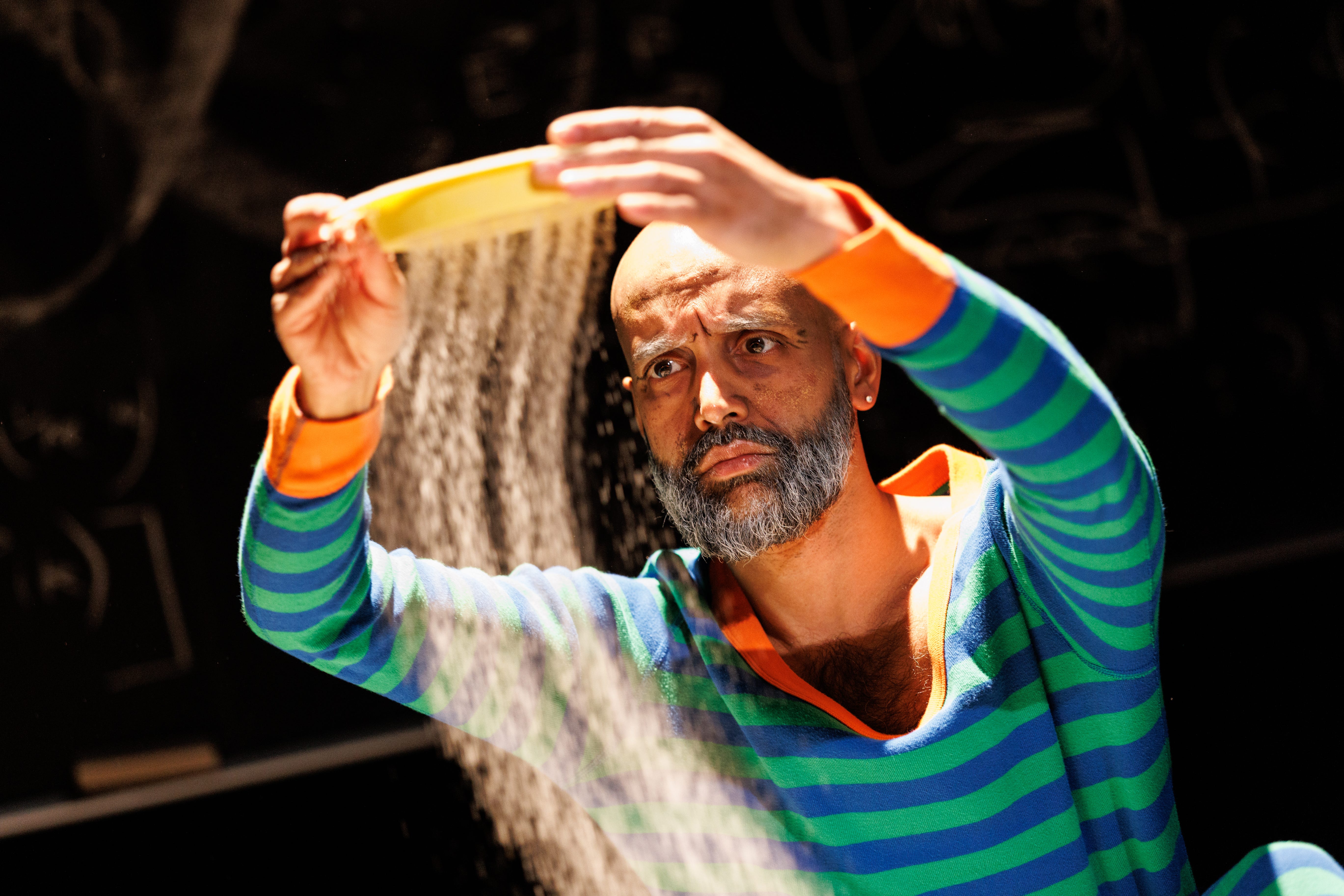
Rheology
I’m late to heap praise Shayok Misha Chowdhury’s Rheology, a numinous and wrenching meditation on motherhood, change, and death. The writer-director of the breathtakingly intimate yet epic Public Obscenities returns to the family bosom for inspiration, burrowing deeper into myth and science, grief and transformation. Chowdhury has a delightfully teasing relationship with naturalism and Rheology begins as a bona fide lecture on the properties of sand delivered by physicist Bulbul Chakraborty (the author’s actual mother). Chakraborty demonstrates the solid yet liquid-like movement of sand particles by pouring a bunch of the beachy stuff into a beaker, then begins coughing, over and over—violently. I’m already spoiling things. Chakraborty’s son is in the audience, taking notes; what we’re witnessing is experimental theater about a physics experiment. From there it metamorphoses into a melancholy yet puckish pre-wake: how can a child imagine and survive a parent’s inevitable death? The wise and totally lovable Chakraborty will correct my science, but everyone’s simply a bunch of molecules passing through and around other bunches of molecules we call mom, dad, son, me. Through May 29.
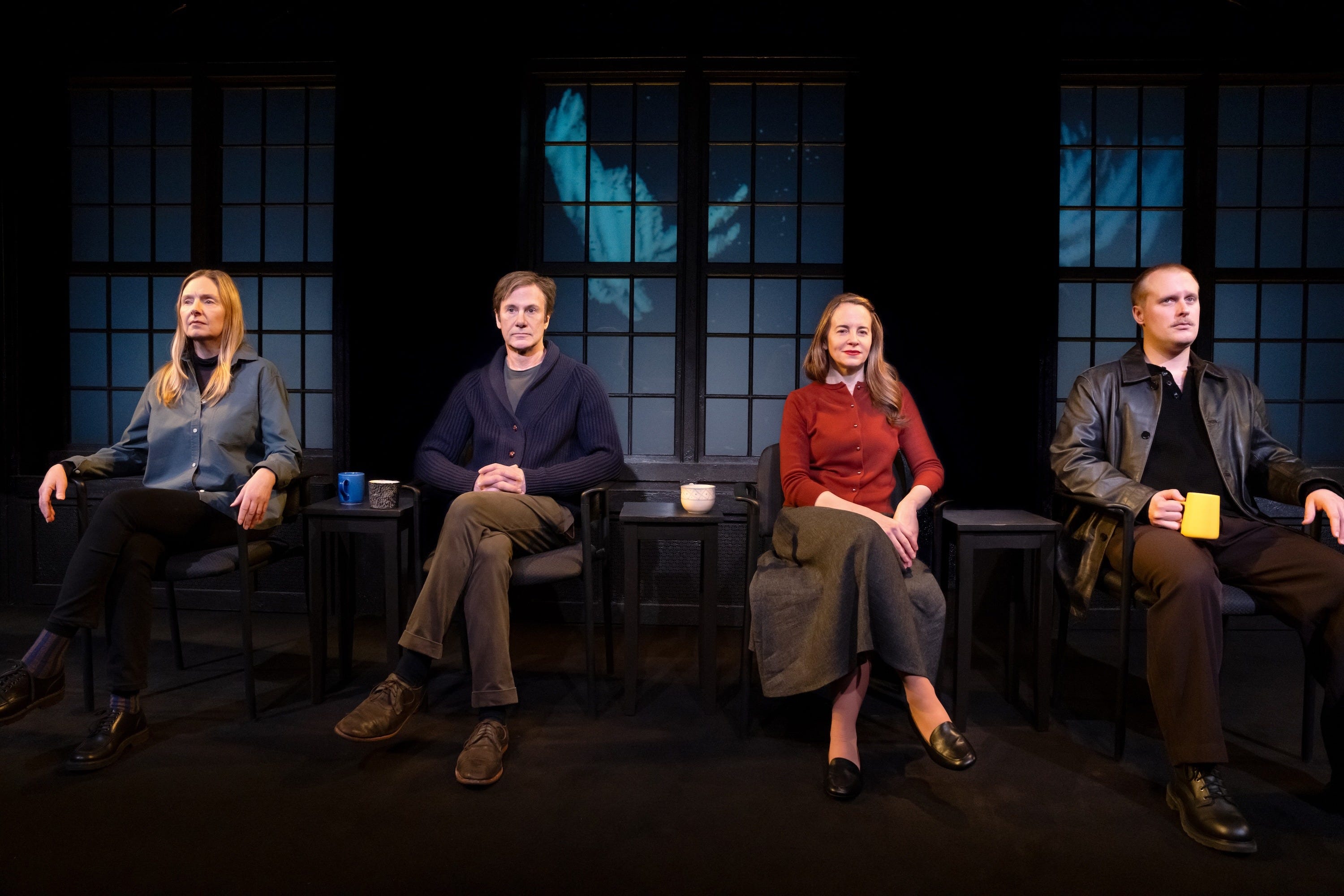
What We Did Before Our Moth Days
How is it possible that I, a person who has idolized Wallace Shawn since college and counts The Designated Mourner among his favorite plays (and caught it twice downtown in 2000), has not written about his latest? Maybe I felt confused and disappointed. Maybe I saw it a second time and noticed and felt so many terrifying things I grew bewildered. Maybe I want to savor it, privately. I’ll get to it one day. In the meantime: GO. It closes Sunday. At the performances I attended, there were a couple empty seats. Get on the waiting list and wait. In this hypnotically eloquent and oblique portrait, four sensitive, artistic people probe and expose inner lives left to rot in an ethical and moral basement. That might make the piece sound more shocking or lurid than it is. Although many of Shawn’s early plays and some later ones have explicit sexual or violent content, this one is mostly left to the audience’s imagination. A successful novelist (Josh Hamilton) marries his college sweetheart (Maria Dizzia) who gives up her ambitions to teach in a hellish low-income school. Their son (John Early) grows up to be a cheerfully depraved ephebophile and designer of book covers. At some point in his thirties, the novelist begins an intense affair with a misanthropic writer of mystery fiction (Hope Davis). There’s a lot these characters aren’t telling us, almost entirely through monologues over the course of three completely engrossing hours. André Gregory, who knows a thing or two about the power of sitting with Wallace Shawn’s words, directs with sublime precision and restraint. What does it mean? They’re all book people, literary creatures, in one way or another. They fall in love or lust, they chase pleasure, they blame genetics or family for who they become, they fuck and write and drink and die. Tim, the smirking perv that Early incarnates with uncanny insouciance, feels like a harbinger of Epstein. He wants young girls and he’s willing to buy fancy friends. Shawn’s father, the legendary New Yorker editor William Shawn, kept a second family in an apartment twelve blocks from the one where Wallace grew up. Is What We Did Before Our Moth Days an elaborate Oedipal fable? Is the lack of overt political talk the point? Pairing Moth Days with The Fever—performed by the author on Sundays and Mondays—may be a deliberate move. Through May 24.
Vanessa
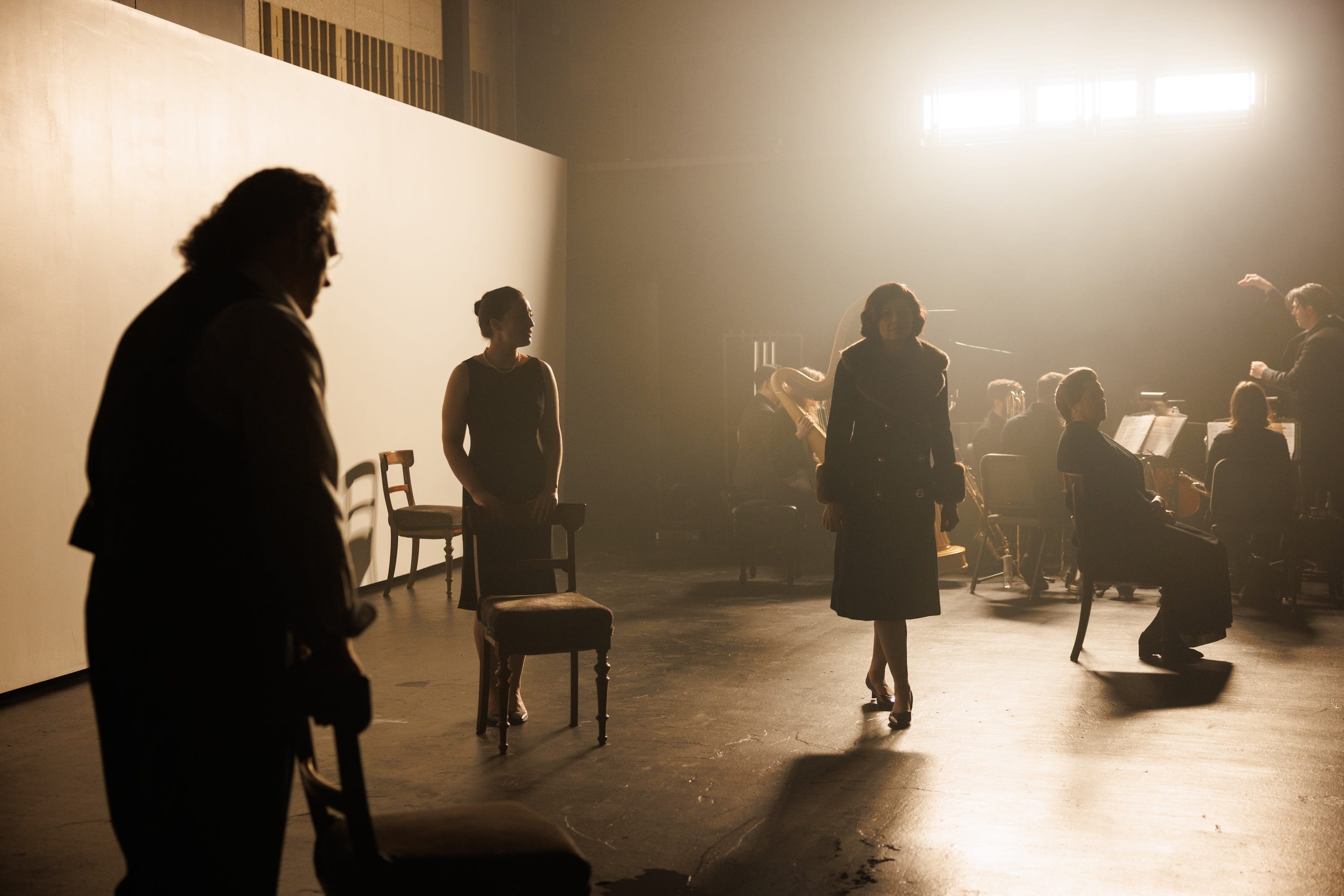
Triumphantly reimagined by Heartbeat Opera, this 1958 work by Samuel Barber (to a libretto by Gian Carlo Menotti) offers a curious theatrical mix: notes of Genet, Ibsen and Chekhov in a gothic fable about a middle-aged baroness rapturously expecting a visit from her former lover. The title diva (Inna Dukach), a vain and imperious recluse, is attended on by her dour niece, Erika (Kelsey Lauritano). When the rakish lover, Anatol (Frederick Ballentine) appears, he’s impossibly young—in fact, he’s the lover’s grown son. Erotic and psychological entanglements grow twisted and deadly as the opera explores love as willful delusion, and the desire to be loved as a cyclical prison that traps the young. Barber’s rich melodies evoke the swelling romanticism of Puccini sour ecstasies of Richard Strauss, plumbing the depths of longing and despair. Director R.B. Schlather’s sensual, monochromatic staging is a symphony of shadows, harsh squares of light, tongues of fog licking the floor—altogether a marvel of dramaturgy by design. The expressionist visuals pair perfectly with music director Dan Schlosberg’s lustrous arrangement for chamber ensemble. Get to know a neglected jewel of American opera. Among the cast, Lauritano is a standout for her burnished mezzo and smoldering journey from virginal servant to sexual being to traumatized survivor of desire. Through May 31.
good stuff! as a bonus, when i saw “rheology,” the playwright’s father was sitting near me; every once in a while i looked over at him while he watched an intimate discussion about death between his wife and son.